
Managing Water Repellency in WA Soils

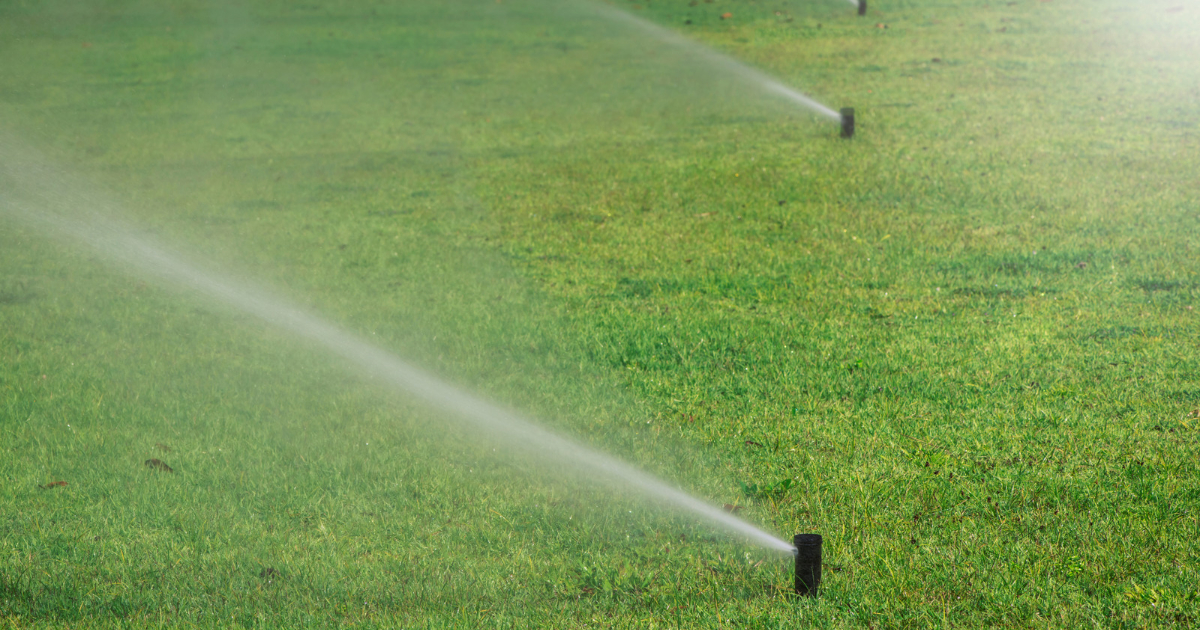
Water repellency is a common challenge across Western Australia’s sandy soils. As organic matter breaks down, naturally occurring organic compounds can coat individual sand particles, creating a water-repellent layer that restricts moisture infiltration into the soil profile. Instead of moving uniformly through the rootzone, water tends to bead on the surface or follow preferential pathways, leading to runoff, localised dry patches, inefficient irrigation and reduced nutrient uptake.

The consequences can include:

  • Reduced water infiltration
  • Localised dry spots and uneven turf growth
  • Increased irrigation requirements
  • Reduced nutrient availability
  • Poor root development
  • Increased plant stress during hot weather

Putting Wetting Agents to the Test Under WA Conditions

Water repellent soils are one of the most common limitations to irrigation efficiency across Western Australia’s sandy turf and landscape soils. While wetting agents are widely used to manage hydrophobic conditions, the critical questions for contractors and turf managers are how quickly they improve infiltration, how effectively they increase soil moisture, and how long those improvements persist.

To evaluate performance under real-world WA conditions, independent trials were conducted by Sports Turf Technology at Prendwick Reserve in the City of Canning. The site was characterised by extremely dry and severely water repellent sandy soils, providing an ideal environment to assess wetting agent performance under challenging conditions.

The study compared both granular and liquid Grosorb formulations against two established commercial wetting agents, with all products applied according to manufacturer recommendations. Performance was monitored over a three-month period using three recognised indicators of soil wettability:

  • Volumetric soil moisture content (%)
  • Droplet Penetration Time (DPT)
  • Water Repellency Severity Rating
soil moisture content results

 *1MAT = 1 month after treatment, 2MAT = 2 months after treatment and 3MAT = 3 months after treatment

Soil Moisture Retention

Volumetric soil moisture content was measured in the upper 5 cm of the soil profile using a handheld moisture probe. Soil moisture is one of the most practical indicators of wetting agent performance because it directly reflects the ability of soil to absorb and retain irrigation or rainfall.

The results showed that both liquid Grosorb at 60 L/ha and granular Grosorb at 600 kg/ha produced the highest soil moisture levels one month after application, outperforming both competitor products.

From a turf management perspective, higher soil moisture levels indicate greater irrigation efficiency, reduced dry patch development and improved rootzone water availability. Maintaining moisture deeper within the profile also supports more resilient turf during periods of heat stress and restricted irrigation.

droplet penetration time results

 *1MAT = 1 month after treatment, 2MAT = 2 months after treatment and 3MAT = 3 months after treatment

Droplet Penetration Time (DPT)

Droplet Penetration Time is a widely used measure of soil hydrophobicity. The test measures how long an ethanol solution droplet takes to infiltrate the soil surface. Lower penetration times indicate improved wetting and reduced water repellency.

The Prendwick Reserve trial demonstrated that Grosorb Granular at 600 kg/ha achieved the fastest droplet penetration rates during the first two months following application. At the three-month assessment, both Grosorb formulations remained among the best-performing treatments and were equivalent to, or better than, the leading commercial competitor.

Importantly, the retail-grade comparison product showed only minimal improvement during the trial period and had effectively returned to untreated control performance levels by month three.

For irrigation managers, faster droplet penetration translates to more uniform infiltration, reduced surface runoff and improved utilisation of irrigation water.

water repellency rating results

 *1MAT = 1 month after treatment, 2MAT = 2 months after treatment and 3MAT = 3 months after treatment

Reduction in Water Repellency Severity

In addition to infiltration speed, researchers assessed overall water repellency using the Molarity of Ethanol Drop (MED) method, which categorises soils on a scale from 0 (non-repellent) to 5 (extremely water repellent).

Prior to treatment, trial soils exhibited an extreme water repellency rating of 5. One month after application, Grosorb Granular reduced water repellency from extreme (5) to moderate (2), representing the largest reduction achieved in the trial. Liquid Grosorb also delivered a significant reduction, lowering water repellency to a rating of 3.

Three months after treatment, both liquid and granular Grosorb continued to provide measurable reductions in water repellency, demonstrating that the products were not only effective at correcting hydrophobic conditions but also delivered ongoing performance throughout the assessment period.

February-vs-May-over-the-trial-period

 *Trial site February vs May 

What the Results Mean for WA Turf and Landscape Managers

The trial findings highlight an important outcome for commercial users: both liquid and granular Grosorb achieved comparable performance despite their different application methods. This provides flexibility for contractors, local governments, sporting facilities and landscape managers to select the formulation that best suits their operations without compromising efficacy.

The final trial assessment concluded that both Grosorb formulations were equal to or better than the leading commercial benchmark product tested and significantly outperformed the retail wetting agent included in the study.

For sites experiencing localised dry patch, inconsistent irrigation performance or increasing water-use pressures, these results demonstrate that a well-designed wetting agent program can significantly improve water infiltration, increase rootzone moisture retention and reduce the severity of soil water repellency across WA’s challenging sandy soils.

grosorb products

Granular vs Liquid Wetting Agents: Choosing the Right Application Approach

While both products solve the same problem, the choice often comes down to operational requirements and application strategy.

Grosorb Granular

Granular Grosorb provides flexibility for preventative maintenance programs and large-scale applications.

Applied as a dry granule, it does not require immediate irrigation for activation. Natural rainfall or irrigation gradually moves the surfactant into the soil profile, making it particularly suited to situations where immediate watering may not be practical.

Key benefits include:

  • Broad and even coverage
  • Excellent suitability for parks, sports fields and large landscapes
  • Can be applied alongside granular fertilisers in a single pass
  • Reduced labour requirements through dual application
  • Long-lasting preventative treatment approach
  • Simple application using conventional spreaders


Grosorb Liquid

Liquid Grosorb is best suited to situations where rapid correction of existing water repellency is required.

The product must be irrigated immediately after application to move the active ingredients into the rootzone, but once activated it provides fast results and targeted treatment capability.

Key advantages include:

  • Rapid correction of hydrophobic soil conditions
  • Lower application rates
  • Precision targeting of problem areas
  • Suitable for use through spray equipment or injection systems
  • Cost-effective corrective treatment option
  • Effective management of localised dry patch and stressed turf areas

Improving Water Efficiency for Long-Term Landscape Performance

As water efficiency continues to be a key priority across Western Australia, effective soil wetting programs are becoming increasingly important for landscape sustainability.

By improving infiltration, reducing runoff and helping water reach the rootzone where it is needed most, wetting agents play a valuable role in maximising irrigation effectiveness, maintaining plant health and building more resilient landscapes.


Case Studies Industry Insights Solutions