Mastering Turf Management
A fantastic day of learning, collaboration, and practical demonstrations — bringing together industry experts to share real-world experience and innovative approaches to managing sports turf.
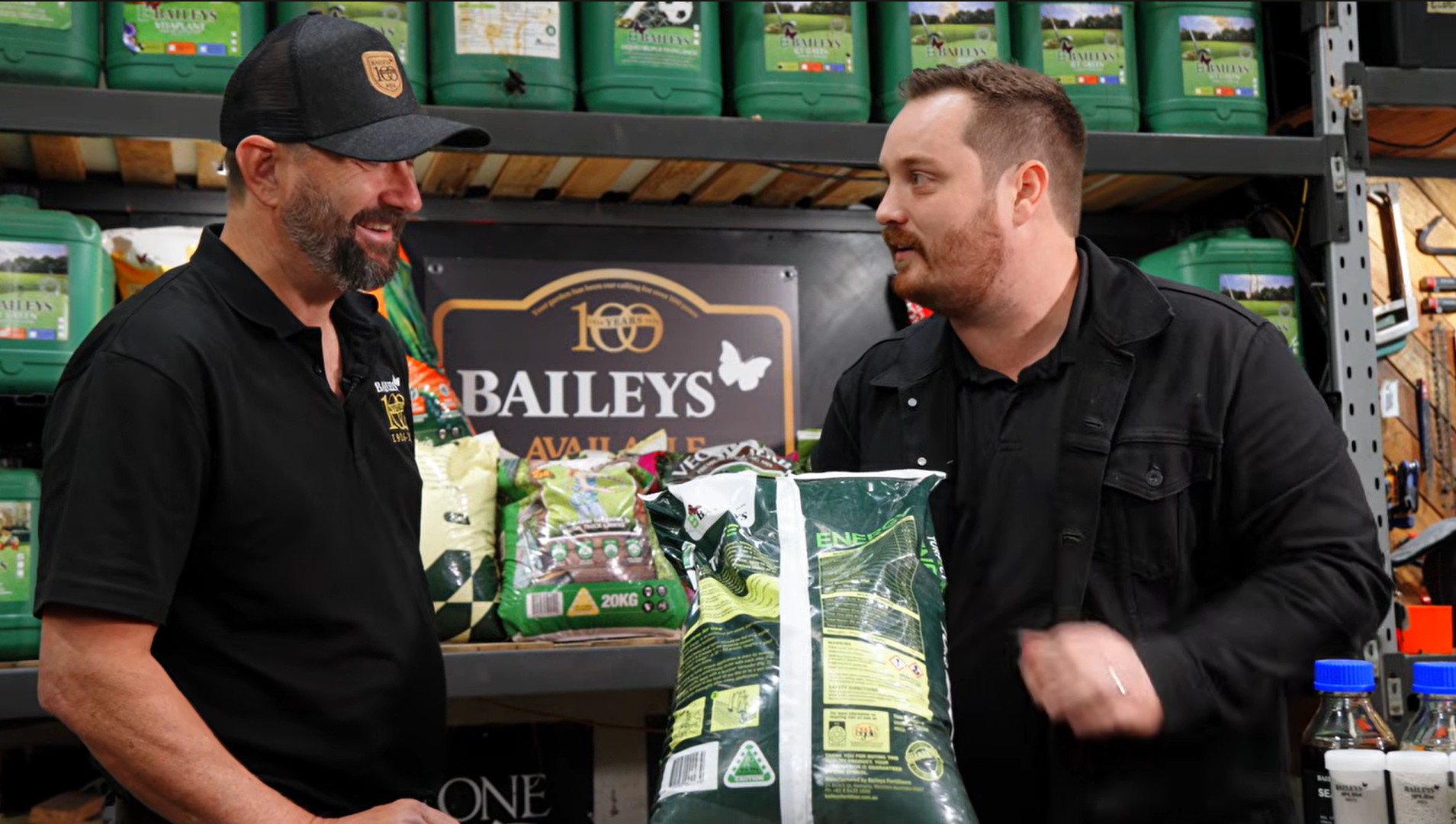
When Perth-based contractor Luke, owner of Silverstone Gardening and host of the Australian Lawn & Garden Podcast, invited Baileys Shannon White onto the show, the goal was simple: share practical fertiliser knowledge that can help turf managers achieve better results and build more profitable businesses.
For Shannon, it’s a conversation he has every day. With more than 30 years in turf management, Shannon has worked across major sporting venues, golf courses, irrigation projects and large-scale turf renovations throughout Australia. Over the past decade with Baileys Fertilisers, he has helped develop products and nutrition programs specifically suited to Western Australian conditions.
Throughout the masterclass, Shannon broke down some of the most common misconceptions about fertiliser, soil health and turf nutrition, helping contractors understand why some products outperform others and how to make better decisions for the sites they manage.
One of the first topics discussed was something many contractors have experienced: two fertilisers can have very similar NPK ratings on the bag but deliver very different outcomes on the ground.
“A lot of it’s to do with what sources of nutrients you’re using in the fertiliser. Also how it’s manufactured, whether it’s a prill product or a blend. Then there’s also how your soil is reacting to the fertiliser.”
While nitrogen drives leaf growth, phosphorus supports root development and potassium contributes to overall plant health, Shannon explained that turf performance comes from how all nutrients work together rather than focusing on a single number.
This becomes particularly important for sports turf managers, councils, schools and contractors who are often chasing specific outcomes such as recovery, wear tolerance, colour retention or reduced mowing frequency.
“When you get into sports turf or contracting, you want different things out of your fertiliser because you want different things out of your turf.”
One of the lesser-known factors influencing fertiliser performance is granule size.
Shannon explained that smaller prills are often preferred on closely mown turf because they settle deeper into the canopy, reducing the risk of product being removed during mowing.
“If you’re cutting at a lower height, you want to use a smaller prill because it’ll settle down into the soil. After you’ve watered it in a couple of times, you’re not mowing the product off.”
Different granule sizes are suited to different environments, from sports turf through to golf course greens, where product uniformity and application efficiency become increasingly important.
A recurring message throughout the interview was the importance of understanding what is happening beneath the surface before choosing a fertiliser program. Shannon explained that soil testing helps identify nutrient deficiencies and allows contractors to tailor applications to suit specific conditions rather than relying on guesswork.
This approach is particularly valuable in Western Australia, where soil conditions can vary significantly across regions and where sandy soils often struggle to retain both water and nutrients.
“Nine times out of ten, you find that it works 100 times better than anything they’ve used before because they’re putting out the right products for the right conditions.”
Western Australia’s sandy soils were another major discussion point.
Shannon noted that many WA soils are commonly deficient in key nutrients such as calcium, magnesium, iron and manganese, while high pH levels can reduce nutrient availability even when those nutrients are present in the soil.
“Most Baileys products will have things that are lacking in our soil like calcium, magnesium, iron and manganese.”
Understanding these local conditions allows turf managers to build more effective nutrition programs and avoid wasting fertiliser on nutrients that may be unavailable to the plant due to soil chemistry limitations.
When asked what contractors most commonly misunderstand, Shannon didn’t mention fertiliser at all. His answer was wetting agents.
According to Shannon, many patchy lawns aren’t suffering from a lack of fertiliser.
“Ninety percent of the time it’s hydrophobic. The water and nutrients they’re putting on are just running off.”
The key takeaway was simple: before adding more fertiliser, make sure water and nutrients can actually reach the root zone.
“We don’t use enough wetting agent. because our soils are so sandy they seal up really fast and become hydrophobic.”
Another valuable lesson was that the ideal fertiliser program changes throughout the year.
As soil temperatures drop, plant growth slows, roots become less active and microbial activity decreases. As a result, turf responds differently to nutrition during winter than it does during spring and summer.
Shannon recommends planning ahead rather than reacting once growth slows. “You want to be putting out something going into winter so that you’re building those carbohydrates in the plant so then it can get through the winter.”
The reward comes when temperatures rise again, It’ll actually respond better coming out into spring.
The discussion concluded with a look at nutrient release technologies and why understanding them can dramatically improve fertiliser performance.
Fast-release fertilisers provide an immediate response and can be useful when rapid green-up or quick correction is required. However, that growth surge is often short-lived. Slow-release technologies work differently, delivering nutrients gradually over a longer period and providing more consistent growth and colour.
As Shannon explained, neither approach is universally better. A fast-release product may be ideal when immediate results are needed, while slow-release nutrition is often preferred when consistent performance and fewer applications are the goal. Many successful turf programs utilise a combination of both.
Key takeaway: Understanding nutrient release patterns can help create more predictable and effective fertiliser programs.
Perhaps the biggest message from the masterclass was that successful turf management isn’t about finding a magic fertiliser. It’s about understanding your soil, selecting products with purpose and building nutrition programs around the outcomes you’re trying to achieve. For turf managers, landscapers and contractors, that knowledge can be the difference between simply maintaining turf and consistently delivering exceptional results.